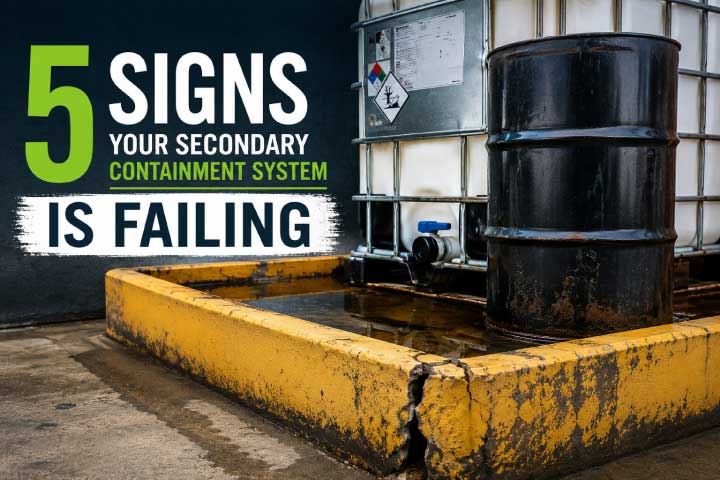
5 Signs Your Secondary Containment System Is Failing
Secondary containment systems are designed to be the last line of defense against chemical spills, leaks, and environmental contamination. Whether your facility uses spill pallets, berms, concrete containment areas, or double-walled tanks, these systems play a critical role in regulatory compliance, workplace safety, and environmental protection.
Unfortunately, secondary containment systems don't last forever. Exposure to chemicals, weather, UV radiation, heavy equipment traffic, and normal wear can gradually compromise their effectiveness. A failing containment system may go unnoticed until a spill occurs—resulting in costly cleanup expenses, regulatory penalties, and potential damage to your company's reputation.
Here are five warning signs that your secondary containment system may be failing and requires immediate attention.
1. Visible Cracks, Tears, or Structural Damage
The most obvious indicator of a failing containment system is physical damage.
Concrete containment areas may develop cracks due to freeze-thaw cycles, ground settlement, or chemical degradation. Flexible containment berms and liners can suffer punctures, tears, seam separation, or abrasion damage from equipment and daily operations.
Even small defects can allow hazardous liquids to escape containment, defeating the purpose of the system entirely.
What to Look For:
-
Cracks in concrete walls or floors
-
Tears or punctures in liners
-
Damaged seams or welds
-
Warping or deformation of containment structures
-
Evidence of impact damage from forklifts or vehicles
Routine visual inspections are one of the most effective ways to identify structural issues before they become major problems.
2. Standing Liquids That Don't Drain Properly
Secondary containment systems should be designed to manage spills and precipitation efficiently. If water, chemicals, or other liquids consistently remain in the containment area, it may indicate drainage problems or underlying structural issues.
Standing liquid can accelerate material degradation, hide damage, and create additional safety hazards. It can also increase the likelihood of overflow during a spill event.
Common Causes:
-
Blocked drainage systems
-
Improper grading or settling
-
Damaged sump systems
-
Structural deformation affecting liquid flow
If your containment area routinely holds liquid long after rain events or maintenance activities, it's time for a thorough inspection.
3. Corrosion, Chemical Attack, or Material Degradation
Secondary containment systems are constantly exposed to harsh chemicals and environmental conditions. Over time, these exposures can weaken containment materials and reduce their ability to withstand future spills.
Metal components may corrode. Concrete surfaces can deteriorate when exposed to aggressive chemicals. Polyethylene and other containment materials may become brittle from prolonged UV exposure or chemical incompatibility.
Warning Signs Include:
-
Rust or corrosion on metal structures
-
Surface pitting or spalling in concrete
-
Fading, brittleness, or discoloration of polymer materials
-
Soft spots or swelling in containment liners
-
Chemical staining or erosion
Material degradation often progresses gradually, making regular inspections essential for early detection.
4. Repeated Leak Detection Alarms or Unexplained Fluid Accumulation
Many modern containment systems include leak detection technologies designed to identify failures before environmental releases occur. If sensors are repeatedly triggering alarms—or if you notice unexplained liquid accumulation within containment areas—it may indicate a breach in either the primary or secondary containment system. EPA guidance emphasizes the importance of leak detection systems that quickly identify failures and releases.
Potential Causes:
-
Hidden liner failures
-
Damaged containment walls
-
Faulty seams or connections
-
Equipment leaks entering containment areas
-
Malfunctioning detection equipment
Never ignore recurring alarms. What appears to be a nuisance alert could be an early warning of a significant containment failure.
5. Increasing Maintenance and Repair Frequency
If your containment system seems to require constant patching, sealing, or repair work, it may be reaching the end of its service life.
While occasional maintenance is expected, recurring issues often indicate that the underlying structure is deteriorating faster than repairs can address. Facilities that rely on temporary fixes may eventually face a complete system failure during a critical spill event.
Signs It's Time for Replacement:
-
Multiple repairs within a short timeframe
-
Recurring issues in the same locations
-
Escalating maintenance costs
-
Difficulty maintaining compliance requirements
-
Reduced confidence in containment performance
In many cases, replacing an aging containment system is more cost-effective than continuing a cycle of repairs.
Protect Your Facility Before Failure Occurs
Secondary containment systems are designed to prevent environmental incidents—not simply react to them. Regular inspections, proactive maintenance, and timely upgrades can help identify problems before they become costly emergencies. Industry guidance and EPA regulations consistently emphasize routine inspections, leak detection, and prompt correction of structural defects to maintain containment integrity.
At Ulticor, we specialize in durable, high-performance secondary containment solutions engineered to withstand demanding industrial environments. Whether you need spill containment berms, portable containment systems, or custom-engineered solutions, our team can help ensure your facility remains protected and compliant.
Don't wait for a spill to reveal a problem.
Contact Ulticor today to evaluate your existing containment system and explore solutions that deliver long-term protection and peace of mind.